Declaration of Solidarity
Geneva, CETIM, June 17, 2026
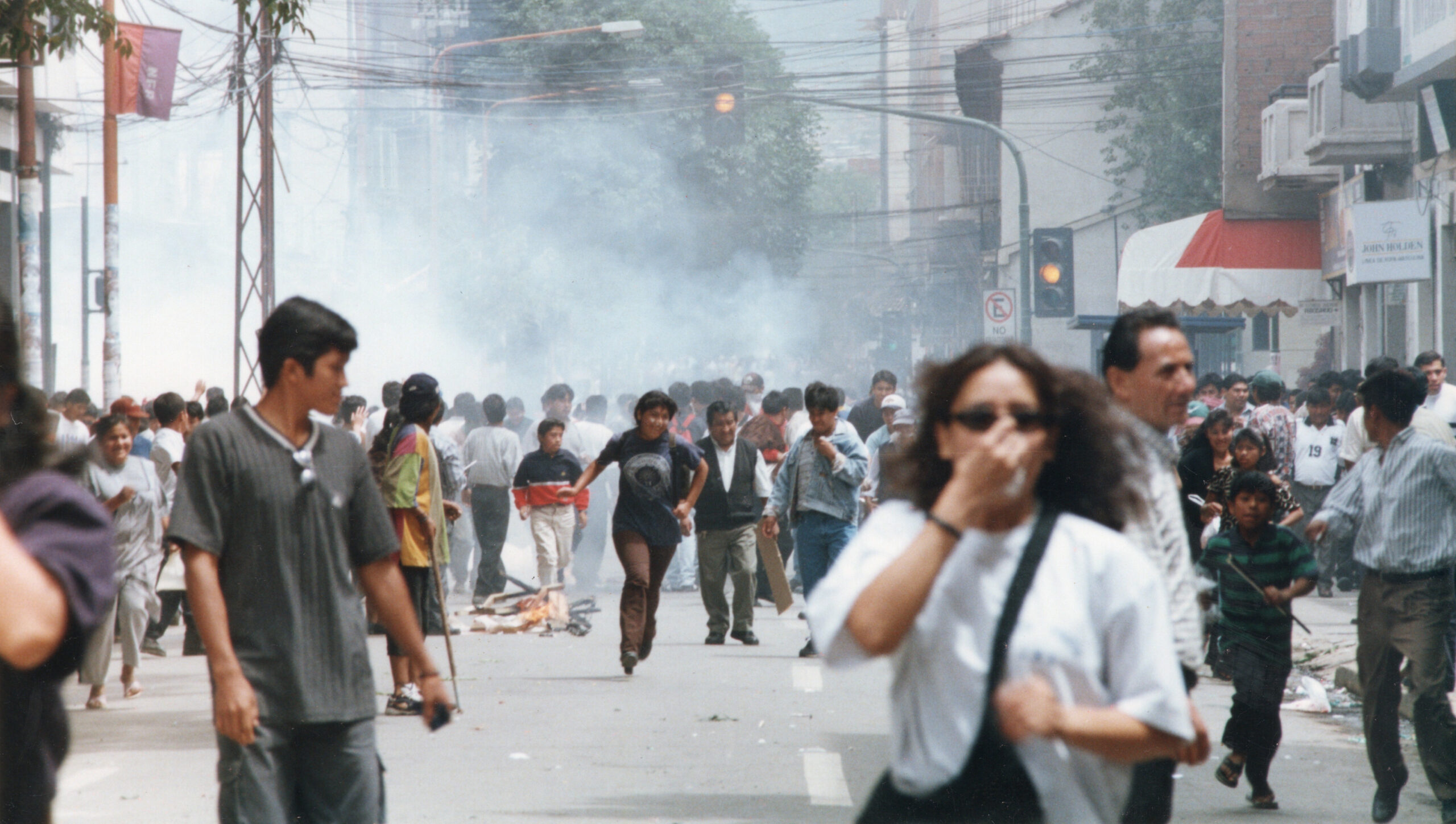
CETIM expresses its solidarity with the Bolivian people’s struggle against the neoliberal policies of Rodrigo Paz’s oligarchic government and the domination of international financial institutions. This nationwide social uprising is spearheaded by peasant and indigenous movements, drawing broad support from trade unions, student groups, and working-class communities. These mobilizations reflect the unconditional rejection by the working class of the deteriorating living conditions caused by austerity policies and the government’s subservience to US imperialist policies and the aforementioned institutions.
Origins of the Uprising
This crisis stems from a rapid deterioration of the economic and social situation, characterized by rising poverty, rampant inflation, falling wages, cuts to public subsidies, and drastic reductions in essential services such as food, healthcare, education, and transportation, among others. These measures are justified in the name of “economic stabilization,” but in reality, they shift the cost of the crisis onto the working class.
Furthermore, the conditions imposed by the International Monetary Fund (IMF) and international financial institutions steer public policies toward reducing social spending, increasing economic flexibility, and opening markets further to foreign capital. In many countries, including Bolivia in the 1990s, these structural adjustment policies have already led to the same effects: privatizations, the erosion of social rights, increased inequality, and extreme poverty.
The strategic issue of natural resources lies at the very heart of the crisis. Bolivia possesses major reserves of lithium, rare earth elements, and mineral resources, which have become central to transnational value chains. Current policies are opening these sectors to increased integration into transnational capital flows, under pressure from financial markets and the interests of transnational corporations.
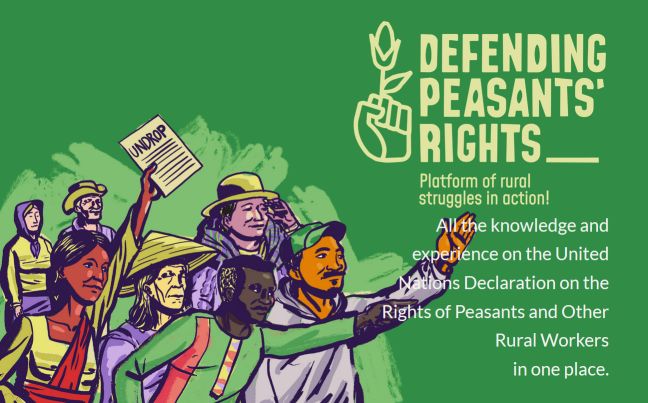
Another major cause of the crisis lies in the adoption of Law 1720, enacted in April 2026, which implements a profound agrarian counter-reform in favor of agribusiness interests. Under the guise of facilitating access to credit for small producers, this legislation subverts the status of small farms, which are protected by the Bolivian Constitution as inalienable family property. By allowing their transformation into medium-sized farms that can be mortgaged, the government is deliberately paving the way for large-scale land dispossession. This measure flagrantly violates Article 17 of the United Nations Declaration on the Rights of Peasants and Other People Working in Rural Areas (UNDROP), which guarantees the right to land and requires states to protect rural workers and peasants from the arbitrary alienation of their livelihoods.
In this context, the popular struggle also takes the form of a natural reaction to the failure to honor campaign promises and the government program proposed during the pre-election period.
Militarization, Repression, and Criminalization of Struggles
Faced with the scale of the mobilizations, the government responded by militarizing the country, threatening to declare a state of emergency, and repressing protests. Under the guise of “restoring order,” these measures aim to break the momentum of popular protest. They have been accompanied by arrests, legal proceedings, and attempts to criminalize the social movement.
We strongly condemn these practices, as well as any attempt to delegitimize the protests by portraying them as conspiracies or political operations. The protests express genuine social anger deeply rooted in the material living conditions of the majority of the population.
These acts of coercion constitute flagrant violations of the International Covenant on Civil and Political Rights. In this context, it is important to emphasize that the mobilizations are the expression of the full exercise of the civil and political rights of the Bolivian people, specifically their right to freedom of association, and to freedom of expression and opinion, which are inherent to a democratic system.
At the same time, these mobilizations express a defense of national and popular sovereignty over natural resources against a government increasingly aligned with the interests of the United States and transnational corporations. For social movements, it is a matter of opposing a new phase of private appropriation of strategic resources and the commodification of the commons.
A Changing Regional Context
The situation in Bolivia cannot be understood in isolation. It is part of a regional context marked by an intensification of US imperialist strategy, which is causing a hardening of the balance of power in Latin America.
In several countries, we are witnessing the rise to power or consolidation of far-right forces, including Argentina, Chile, Ecuador, El Salvador, Honduras, Paraguay, and Bolivia, the strengthening of authoritarian neoliberal projects, and, in some cases, coups or episodes of political destabilization.
The Bolivian movement is thus part of a broader dynamic of popular resistance in Latin America. We are also witnessing a rise in forms of self-organization, such as strike committees, local assemblies, and community coordinating bodies. These forms of organization express a desire to guide the renewal of the social movement from its grassroots level.
Women play a crucial role in these mobilizations, both in organizing them and in defending the movement’s social and political interests. Their commitment underscores the profoundly social and collective dimension of the struggle.
Conclusion: Anti-Imperialism and Internationalism
Today, in Bolivia as elsewhere in Latin America, the struggle against the oligarchy, against the domination of international financial institutions, and against imperialist interference is inseparable from the struggle for social justice, for the right of peoples to self-determination, and for popular sovereignty.
In light of this situation, we urge the Bolivian authorities to respect their international human rights commitments, particularly regarding the rights to freedom of association and expression, as well as the rights of peasants. This is all the more crucial given that the Plurinational State of Bolivia played a leading and essential role in negotiating and drafting the UN Declaration on the Rights of Peasants.
In the tradition of internationalist solidarity championed by CETIM, we reaffirm our support for peoples, organizations, and communities that resist policies of dispossession and build alternatives based on social justice, real democracy, and popular sovereignty, with priority given to cultural, food, and energy issues.
Finally, we call on all peoples, organizations, and social movements to mobilize in solidarity with the existential struggle of the Bolivian people.
 «Il n‘y a pas un monde développé et un monde sous-développé, mais un seul monde mal développé»