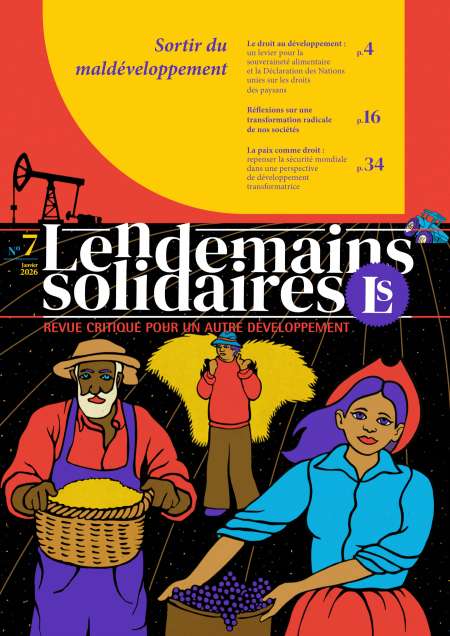
Oil exploitation, logging, drilling, toxic waste. The irresponsibility of multinationals is devastating the planet and its inhabitants.
For more than 50 years, CETIM has denounced the destruction of our environment. It supports the struggles of indigenous peoples and peasants to (re)assert their sovereignty over
-
- their living environments
- their natural resources
- their way of life and to face
- and to confront the stranglehold of transnational corporations with the agreement of the States.
Toxic wastes
Other documents and links
HUMAN RIGHTS COUNCIL 28th session 02 March – 27 March 2015 [Exerpt from the declaration] For the CETIM with which the Coordination Climate and Social Justice and the Forum for a new global governance are associated, there is an indissoluble link between the dramatic consequences of climate change and the human rights that are defended […]
Continue reading
The Tampakan Copper-Gold Project in the Philippines threatens the environment and the livelihoods of local populations. The Bla’an indigenous peoples that occupy these ancestral territories oppose the project and are victims of multiple violations of human rights. But Glencore-Xstrata is still insisting on pursiung the project.
Continue reading
The mining project of Oceana Gold (formerly Pacific Rim) in El Salvador threatens the environment and the livelihoods of communities, Local populations oppose the project and are victims of human rights violations. The government has refused to allow the project to continue and is now being sued by Oceana Gold at the World Bank’s International Centre for Settlement of Investment Disputes (ICSID). The company is demanding 300 million dollars in compensation.
Continue reading
In 26 years of oil drilling in the Amazon region of Ecuador, Chevron (formerly Texaco) polluted more than 450,000 hectares of one of the planet’s richest biodiversity regions, destroying the living and subsistence of its inhabitants. After 21 years of litigation, and despite a ruling by the Ecuadorian courts, impunity continues for Chevron, and the victims of its activities in Ecuador are still waiting for justice and compensation.
Continue reading
In 60 years of oil production in the Niger Delta, the local communities have known no rest. Shell has systematically violated human rights and destroyed the environment as well as the livelihoods of communities, but neither international campaigns nor national laws, courts and regulatory agencies have been able to end these practices.
Continue reading
« Previous
1
…
4
5
6
7
8
9
Next »