Article published in Le Courrier [in French], 16 September 2025
By Raffaele Morgantini, Representative of CETIM at the UN
The third edition of the Nyéléni Global Forum took place in early September in Sri Lanka. After two previous sessions focused on food sovereignty and then on agroecology, this large gathering of social movements broadened its scope towards an intersectoral approach, calling for a “systemic transformation.” Here is a report from the CETIM.
From September 6 to 13, Sri Lanka hosted the 3rd Nyéléni Global Forum (1), one of the world’s largest gatherings of social movements and grassroots organizations. Around a thousand delegates from more than 100 countries, representing hundreds of millions of people, gathered in Kandy to affirm a shared conviction: the systemic transformation of our societies is neither a utopia nor an option, but an unavoidable urgency.
Representatives of peasant organizations, small-scale fishers, Indigenous peoples, nomadic and pastoralist communities, landless workers, migrants, feminist and anti-racist movements, trade unions, climate justice organizations, youth collectives, public health defenders, and social and solidarity economy actors were present at the Forum. They were supported by civil society organizations and engaged academics. This unprecedented diversity gave substance to what participants called a “movement of movements.” In an era marked by the rise of (neo)fascisms, wars, and systemic multidimensional crises, the Forum demonstrated the ability of grassroots forces to unite around common goals.
A shared analysis of global crises
The Kandy Declaration, adopted at the end of the discussions, provides a stark assessment of the state of the world. Participants denounced the growing commodification of commons, land and sea grabbing, the exploitation of working classes, the rise of patriarchy and discrimination, as well as digitalization and financialization creating new forms of oppression. Genocide, political interference, and ongoing wars were highlighted as tragic examples of collusion between imperialism, transnational corporations, and corrupted State powers.
In response, the Forum reiterated that food and energy sovereignty, peace and solidarity among peoples, gender equality, and social justice are not options, but indispensable conditions for humanity’s survival.
Shared commitments
Beyond the diagnosis, the 3rd Nyéléni Global Forum adopted a set of coordinated actions and campaigns. It was decided to launch, starting in 2026, a Global Day of mobilization against imperialism, wars, and the use of hunger as a weapon; as well as an Global Day of Nyéléni to maintain the convergence dynamic initiated this year.
The Forum also confirmed the necessity of creating political training programs on food sovereignty, anti-racism, and grassroots feminism. Developing a common understanding of these issues was considered an essential step to consolidate a collective ideological framework and define coherent political lines of action.
Strengthening ties with trade unions was also identified as a key strategic priority, establishing dialogue between the two main transformative political subjects: rural and urban working classes, in all their diversity.
In terms of campaigns, delegates launched several common fronts: against the privatization of health, against land grabbing and industrial aquaculture, against corporate impunity and for their legal accountability; but also for a new international trade framework based on food sovereignty, and for the cancellation of illegitimate debts strangling countries of the Global South.
A founding moment for a shared future
More than a simple discussion forum, the gathering created a genuine space for collaboration and convergence, aimed at building a strategy of transformation rooted in the alternatives and solutions developed by each sector. The class, feminist, anti-imperialist, and anti-racist dimensions of the movement were affirmed as an inescapable compass for the future.
At the close of the Forum, the movements gathered in Kandy declared loud and clear: “Systemic transformation, now and forever.” The challenge is, of course, immense, but the collective strength, internationalist solidarity, and wealth of shared experiences made this meeting a historic milestone. Time will tell how far this “movement of movements” will be able to impose a new horizon.
Notes:
(1) The two previous Forums were held in 2007 and 2015 in Mali. The first was dedicated to food sovereignty, the second to agroecology.
————————————————————————-
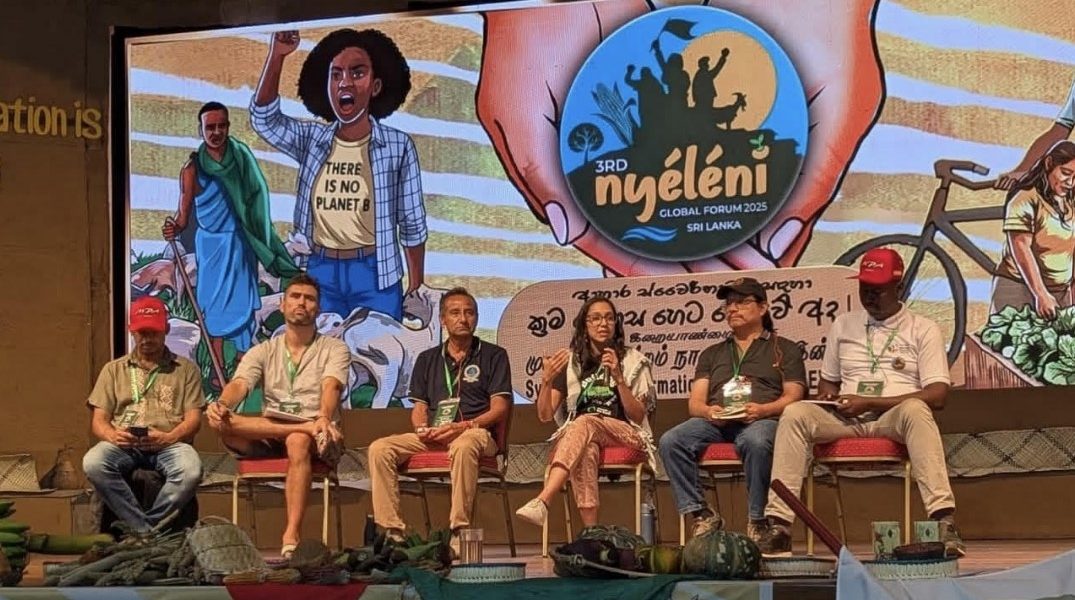
PANEL: Discussion on key spaces for convergence of social movements
 «Il n‘y a pas un monde développé et un monde sous-développé, mais un seul monde mal développé»