PRESS RELEASE
Tegucigalpa, Geneva, 24 November 2026
Following up on the complaint submitted on 24 July 2026 [1] to the human rights protection mechanisms of the United Nations, the Central Nacional de Trabajadores del Campo (CNTC), together with the peasant organizations of Honduras affiliated with the Coordinadora Latinoamericana de Organizaciones del Campo (CLOC–La Vía Campesina) and CETIM, welcome the communication [2] addressed to and interpelling the Government of Honduras by the UN Working Group on the Rights of Peasants and Other People Working in Rural Areas and three other UN Special Rapporteurs.
This interpellation addresses the serious impacts arising from the adoption of Legislative Decree No. 107-2026, entitled “Law for the Strengthening and Protection of the Agribusiness Sector, Energy Projects, Tourism, Livestock, and Small Agricultural Producers of Honduras.” In it, the UN Working Group on the rights of peasants and other people working in rural areas, together with the Special Rapporteurs on the right to food, on the rights to freedom of peaceful assembly and of association, and on the situation of human rights defenders [3], express a series of concerns and warn that the provisions of this Decree contravene the fundamental rights of peasant, Indigenous, and Afro-descendant communities in Honduras.
Denial of the right to land and priority for agribusiness interests
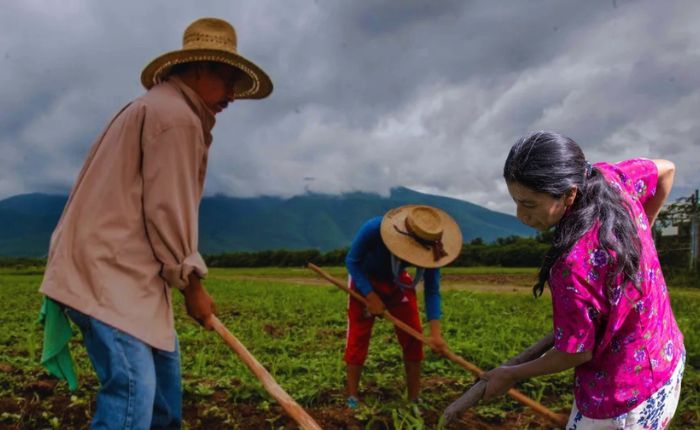
The Decree prevents agricultural land from being redistributed on grounds of public utility or within the framework of agrarian reform processes, even when claimed by local communities that have inhabited or cultivated it for generations. Given the structural concentration of land ownership in Honduras, the UN experts recall the need for the State to pursue an agrarian reform that guarantees effective and equitable access to land. They also point out that facilitating, without discrimination, access to land and other natural resources constitutes an obligation of the State, at both the national and international levels, which is contravened by this Decree. It is worth noting that this legislation grants absolute administrative priority to agribusiness and energy companies through fast-track procedures for obtaining environmental permits and licenses. In this regard, the experts warn that this provision could constitute a form of discrimination on grounds of property or economic and social status, in addition to weakening environmental protection and marginalizing family farming.
Imminent evictions and circumvention of justice.
In implementation of this law, 1,000 eviction orders are planned against peasant and Indigenous communities in different regions of the country. The legislation provides for the immediate eviction of any occupation of land, without requiring a prior final judicial ruling. It also establishes sanctions for serious misconduct against public officials who fail to enforce it. The experts express their deep concern over this measure, which could have serious consequences for the human rights of communities, including the rights to land, housing, and food. Furthermore, they warn that it contravenes the right of access to justice and could contribute to hasty decisions and actions, leading to violations of the fundamental rights of the communities in question.
In this context, the intervention of the UN mechanisms constitutes a significant legal and political step forward for peasant communities facing threats of imminent eviction, as it provides grounds to challenge evictions that contravene the provisions of the United Nations Declaration on the Rights of Peasants and Other People Working in Rural Areas (UNDROP). This pronouncement represents a tool that peasant organizations and communities can use to defend their rights and counter such initiatives and violations.
Violations of freedom of assembly and criminalization of human rights defenders
The concerns expressed also highlight potential violations of the rights to freedom of association and peaceful assembly, as a consequence of the prohibition of demonstrations and strikes. The experts recall that the State must avoid general restrictions on the exercise of the right to peaceful assembly and ensure that any limitation complies with the principles of legality, necessity, and proportionality.
In addition, the Special Rapporteurs and the Working Group alert to the risk of criminalization of peasant communities, Indigenous Peoples, and human rights defenders. Indeed, the Decree could obstruct from the outset any advocacy initiative, dialogue, or land redistribution proposal, turning legitimate claims into legally impossible demands.
In conclusion, the interpellation from the UN mechanisms urges the Government of Honduras to demonstrate that this law respects national and international human rights standards; to guarantee prior judicial review for any eviction; and to ensure the protection of the fundamental rights and lands of rural and Indigenous populations. To date, the State of Honduras has not responded.
Faced with this situation, we, the signatory peasant and human rights organizations, urge the Government of Honduras to:
– Suspend the eviction orders stemming from Circular DGPN-(S/D)-No. 009-2026.
– Repeal or revise Legislative Decree No. 107-2026, in order to ensure its conformity with national and international human rights obligations.
– Develop a comprehensive policy that guarantees equitable access to land and the resolution of agrarian conflicts, in accordance with the standards established in UNDROP.
– Establish a comprehensive legal framework to combat discrimination and guarantee victims access to protection mechanisms and effective remedies, in a context marked by persistent socioeconomic, racial, and gender inequalities.
Contacts
Franklin Almendares, National Secretary General of CNTC, almendaresfranklin@yahoo.com
Anderson Amaro, Regional Coordinator CLOC-LVC, amarompabrasil@gmail.com
Raffaele Morgantini, CETIM Representative to the UN, raffaele@cetim.ch, +41796606514
Notes
[1] Complaint CETIM-CNTC-CLOC-LVC (only in Spanish): https://www.cetim.ch/wp-content/uploads/Informe_Honduras-desalojos-UNDROP_Julio2026.pdf
[2] United Nations, Special Procedures of the Human Rights Council. Communication to the Government of Honduras, reference OL HND 4/2026, of 21 August 2026. https://spcommreports.ohchr.org/TMResultsBase/DownLoadPublicCommunicationFile?gId=31230
[3] Special Rapporteurs and independent experts are experts appointed by the United Nations Human Rights Council to address thematic issues or specific situations related to human rights. They act independently, investigate and report on alleged violations, formulate recommendations to States, and contribute to promoting the protection of human rights at the international level.
 «Il n‘y a pas un monde développé et un monde sous-développé, mais un seul monde mal développé»