Published in ‘Le Courrier’ on 3 February 2026
By Raffaele Morgantini, CETIM Representative to the UN
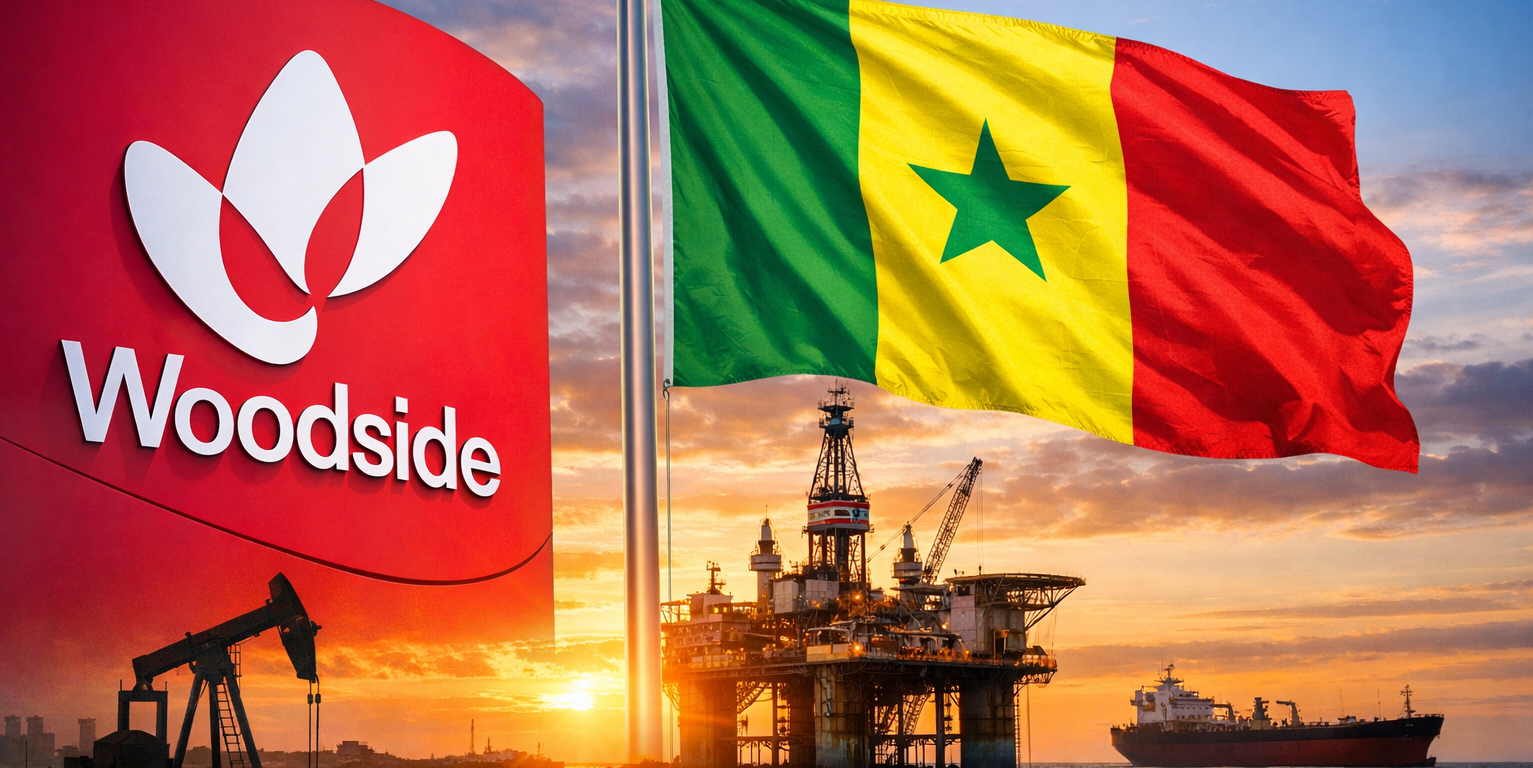
Since 2024, Senegal has been seeking to assert its energy sovereignty by renegotiating the extractive contracts inherited from the previous neo-colonial regime. Its confrontation with Australian oil company Woodside Energy before an international arbitration tribunal illustrates the tension between the country’s desire to free itself from a logic of neo-colonial exploitation and the legal architecture of international trade. CETIM provides insight.
Since the Pastef (African Patriots of Senegal for Work, Ethics and Fraternity) took power in March 2024 – with Bassirou Diomaye Faye elected president and Ousmane Sonko, the party’s historic leader, appointed prime minister – the Senegalese government has sought to fulfil its promise of ‘rupture’, notably through the renegotiation of oil and gas contracts. This policy aims to shift the balance of power and regain a degree of sovereignty over key strategic sectors that have long been dominated by neo-colonial foreign interests.
In this context, a standoff is now underway with the Australian transnational corporation Woodside Energy, a giant in the sector, over the issue of oil royalties. The objective is to impose a more favourable tax regime for the country. In response, the company has taken the matter to the International Centre for Settlement of Investment Disputes (ICSID) to demand financial compensation for the reform, invoking clauses included in a 1999 agreement between Senegal and Australia on investment protection. More specifically, the oil company is suing Senegal for the retroactive application of a tax change that it considers a violation of the protections guaranteed by this bilateral investment treaty.
Behind this legal dispute, however, lies a political and economic battle that touches on the very structure of the quest for true economic independence from powerful transnational actors, agents of a long-standing neocolonial strategy that aims to deprive African states of their resources.
Justice at the service of corporate power. Most bilateral investment treaties contain clauses that allow an investor – in this case Woodside Energy – to sue the host state of its activities – Senegal – before an international arbitration tribunal. The distinctive feature of these “investor-state dispute settlement” (ISDS) mechanisms is their binding and coercive nature. Through them, transnational corporations can challenge public laws, including environmental and social legislation adopted for the well-being of the population, and obtain substantial compensation under the guise of “investment protection rights”. ISDS mechanisms are nothing less than a contemporary form of legal neo-colonialism, which reduces the ability of states to freely define their public policies. In short: profit before people, private justice over sovereignty.
It should be noted, however, that the renegotiation of oil contracts is not an exception, but a practice already observed in many countries that have, at different times in their history, revised their energy agreements or even nationalised their hydrocarbons. The new Senegalese government aims to increase its tax revenues in order to finance its investments and build a self-centred development model, where oil revenues directly benefit the population. From this perspective, the revision of contracts appears to be an unavoidable path that any truly independent country should take.
A legacy of power asymmetry. Traditionally, oil companies have played a decisive role in the management of natural resources in Southern countries. They concentrate technical expertise and strategic information, creating a structural power asymmetry to the detriment of producing states. This excessive asymmetry has led many African countries to sign disadvantageous contracts. Senegal wants to break with this legacy and rebalance a relationship marked by an unfavourable and unequal balance of power.
However, the challenge is immense. Oil prices are set on international markets, subject to speculation and high volatility. While powers such as Saudi Arabia and Russia can influence prices through their weight, a country like Senegal remains exposed to fluctuations beyond its control. Added to this is the fact that production volumes and essential data on profitability often depend on the companies themselves. In such a context, long-term investment remains complex. However, for Dakar, this is a necessary step in order to transform oil revenues into a real lever for self-centered development.
Prospects for self-determination. The broader context of this standoff is the questioning of an economic and trade framework inherited from colonialism, which has long kept African countries trapped in poverty. Beyond the dispute with Woodside Energy, Senegal is asserting its national sovereignty so that its resources serve its people, with a view to self-determination.
By asserting its desire to renegotiate these contracts, Senegal is reopening a crucial debate: how can we rethink the global economic architecture to make it more democratic, more equitable and, above all, more responsive to the needs of the people?
In this sense, Senegal, like other countries, must withdraw from the treaty linked to the Convention on the Settlement of Investment Disputes between States and Investors, which governs ICSID. Any state wishing to regain its sovereignty must withdraw from this neocolonial legal framework.
 «Il n‘y a pas un monde développé et un monde sous-développé, mais un seul monde mal développé»