Indigenous fishing leaders from Panama’s Ngäbe Buglé people are at the UN Human Rights Council this week to highlight the repression of indigenous fishers and widespread fishing bans which threaten their livelihoods.
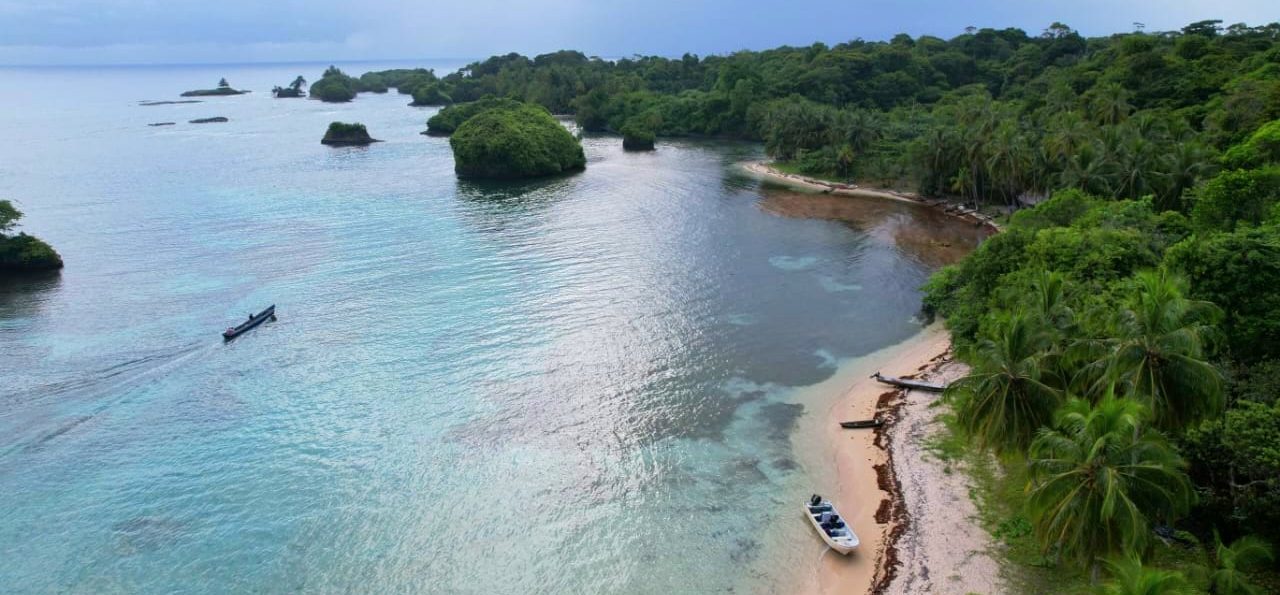
The government of Panama has successively cut off access to traditional fishing grounds of the Ngäbe Buglé people since 2010, promising compensation in the form of social programs and food aid which never materialized. Some closures of fishing grounds have been linked to the state’s efforts to meet the global 30×30 conservation goal. Resistance from fishers has been met with violent repression, including the deaths of several leaders.
The Ngäbe Buglé now only have access to one fishing ground in Escudo de Veraguas. Earlier this year, the government informed them and Ño Kribo communities that it is also considering a ban there, claiming it was needed to replenish fish stocks.
“The ban threatens our customary fishing rights, our right to food and food sovereignty, and our cultural survival, and it has been enforced with deadly repression,” Alfonso Simon Raylan, a Ngäbe Buglé fisher leader and Secretary General of Sindicato de Trabajadores del Mar (SITRAMAR) told the Human Rights Council in a statement at the 60th session of the Human Rights Council.
His organization, SITRAMAR, is a member of the World Forum of Fisher Peoples, a global movement representing 10 million traditional and artisanal fisher peoples and harvesters. Their visit to Geneva is supported by FIAN International and CETIM.
Fishing bans reflect the structural discrimination and marginalization that fisher peoples and Indigenous Peoples have faced historically and continue to endure today. The Ngäbe Buglé – much like other Indigenous Peoples in the region and around the world – have practiced ancestral fishing for subsistence for generations. They have nourished their communities for centuries in harmony with nature, using only fishing rods, small traps, or traditional “lung fishing” methods to catch fish and lobster.
Fortress conservation
“30×30 is not about conservation, it is about exclusion. States, in partnership with corporates and big conservation NGOs are promoting a fortress conservation model that criminalizes our people, justifies bans and closure of their territories, while leaving industrial polluters untouched,” said Herman Kumara, General Secretary of the World Forum of Fisher Peoples (WFFP).
“True conservation must start from the knowledge and practices of those who have lived in balance with nature for generations.”
Both the fishing ban and Panama’s Law 462, passed in March of this year, have triggered widespread food and resource shortages, alongside violent crackdowns.
“For our communities, who have sustainably fished with seasonal closures for centuries, this is not conservation – it is persecution,” added Alfonso Simon Raylan.
Brutal violence
The law further limits access to social security and medical care, worsening economic insecurity. Since its passage, there have been mass protests. As recently pointed out by UN Special Rapporteurs, peaceful indigenous protesters and their allies, have allegedly been met with disproportionate force and brutal violence by armed military police for simply exercising their human right to protest.
Several community leaders, including three members of Alfonso Simon Raylan’s family, have been killed.
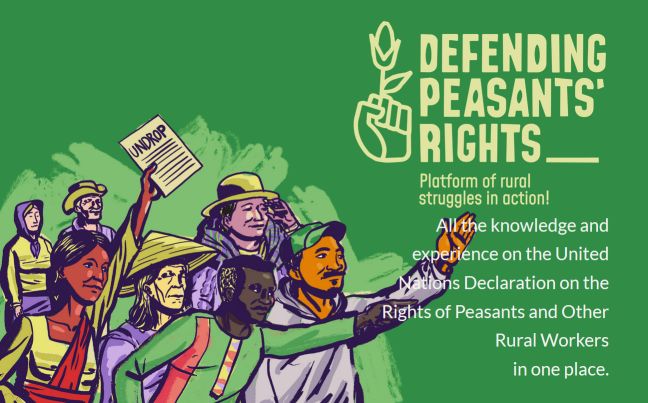
Denying Indigenous Peoples access to their traditional fishing grounds and banning fishing, their only source of livelihood, undermines their human rights – including the right to food and nutrition and the right to land and natural resources – enshrined in the International Covenant on Economic, Social and Cultural Rights (ICESCR). It also violates the UN Declaration on the Rights of Indigenous Peoples (UNDRIP) and the UN Declaration on the Rights of Peasants and Other People Working in Rural Areas (UNDROP). Both affirm the rights of Indigenous Peoples to self-determination, free, prior and informed consent, as well as access to their traditional territories and the survival of their culture. Panama, as a state party to ICESCR has binding obligations to respect, protect, and fulfil these rights.
Responding to the account of conditions in Panama, Carlos Duarte, Vice-Chair of the UN Working Group on UNDROP, said that fishers have often been overlooked in policy making.
“Their water territories have not normally been recognized, even though their habitats and their harvests are ancestral,” he noted, adding that the next report of the group will be on issue of territoriality.
“We hope that we can continue working to recognize these water territories and the vital relationship between fishers and nature.”
FIAN International and CETIM stands in solidarity with the Ngäbe Buglé, SITRAMAR, and WFFP, calling on Panama to respect Indigenous Peoples’ human rights, withdraw the fishing ban, repeal Law 462 and end violent crackdowns on peaceful protests. FIAN International and CETIM also calls on Panama to take adequate measures to ensure that Indigenous fishers can meaningfully participate in all policy processes affecting their livelihoods
 «Il n‘y a pas un monde développé et un monde sous-développé, mais un seul monde mal développé»